

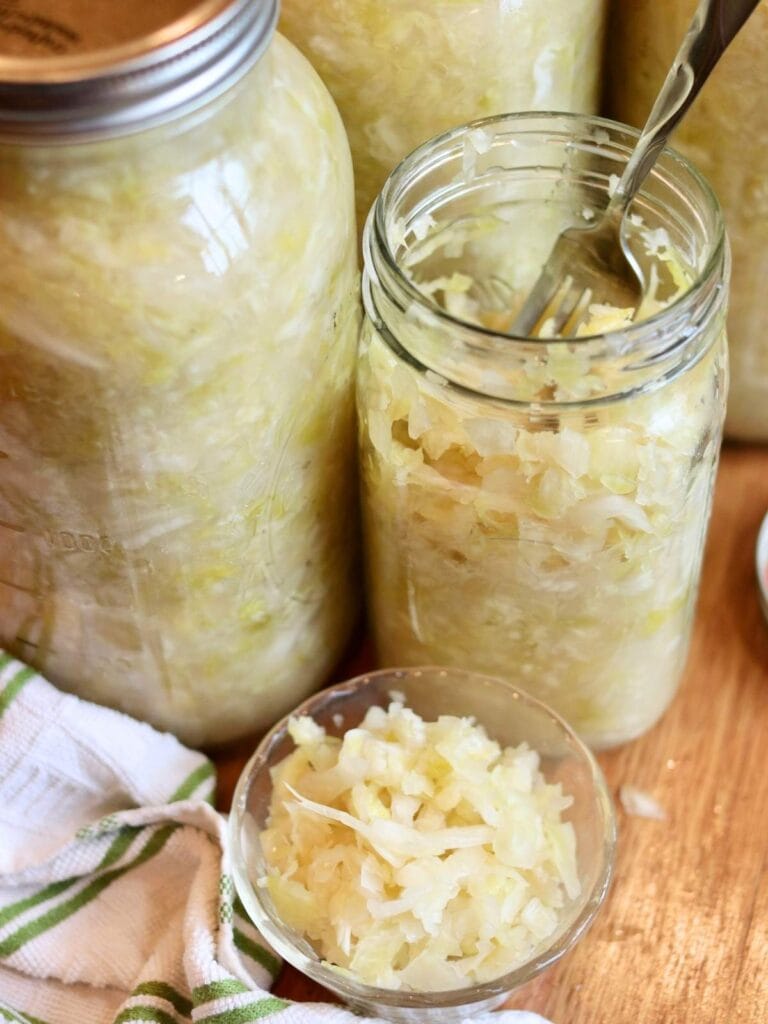
Making sauerkraut in a crock is the easiest and most fool-proof way to get a delicious, probiotic-packed ferment every time! With just two ingredients and some time, you’ll have plenty of delicious homemade sauerkraut to enjoy.
Quick Look at the Recipe
- 🍽️ Flavor: Tangy and bright
- ⏱️ Prep Time: 1 hour
- 🫙 Fermentation Time: 2-3 weeks
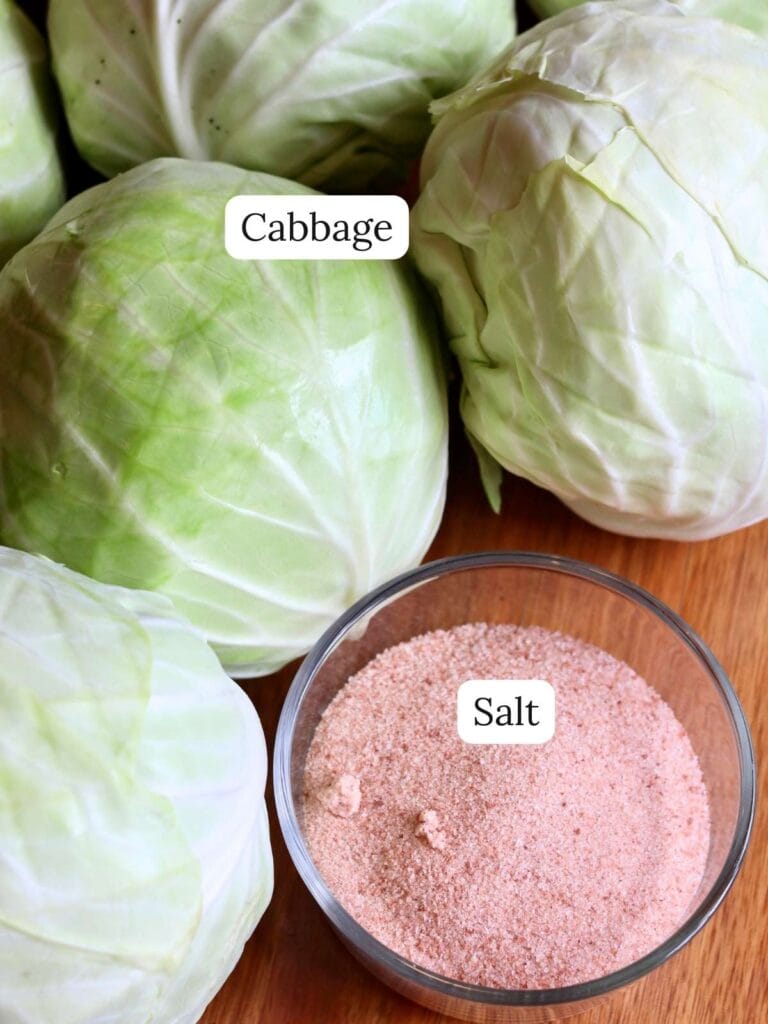
- 🥣 Main Ingredients: Cabbage, salt
- 📋 Method: Lacto-fermentation
- 📖 Dietary Info: Gluten-free, dairy-free, egg-free, vegan, paleo, Whole30, keto, AIP
- 👩🍳 Tip: Unlike many other vegetables, sauerkraut has enough juice to produce it’s own brine, leading to a richer ferment.

Exactly What My Husband Needed
When my husband first got serious about healing Crohn’s through diet, sauerkraut was one of the most important foods for him. At first we made it in mason jars, but once we got a crock, our success rates went through the roof.
We no longer struggled with mold or Kham yeast, and I loved finally being able to make big batches.
Over time I’ve perfected my fermentation methods, and now our fridge is always stocked with the tangiest, most delicious sauerkraut you’ve ever tried. I’m excited to share this probiotic-packed recipe with you!
Ingredients
Tools Needed
Step-By-Step Instructions
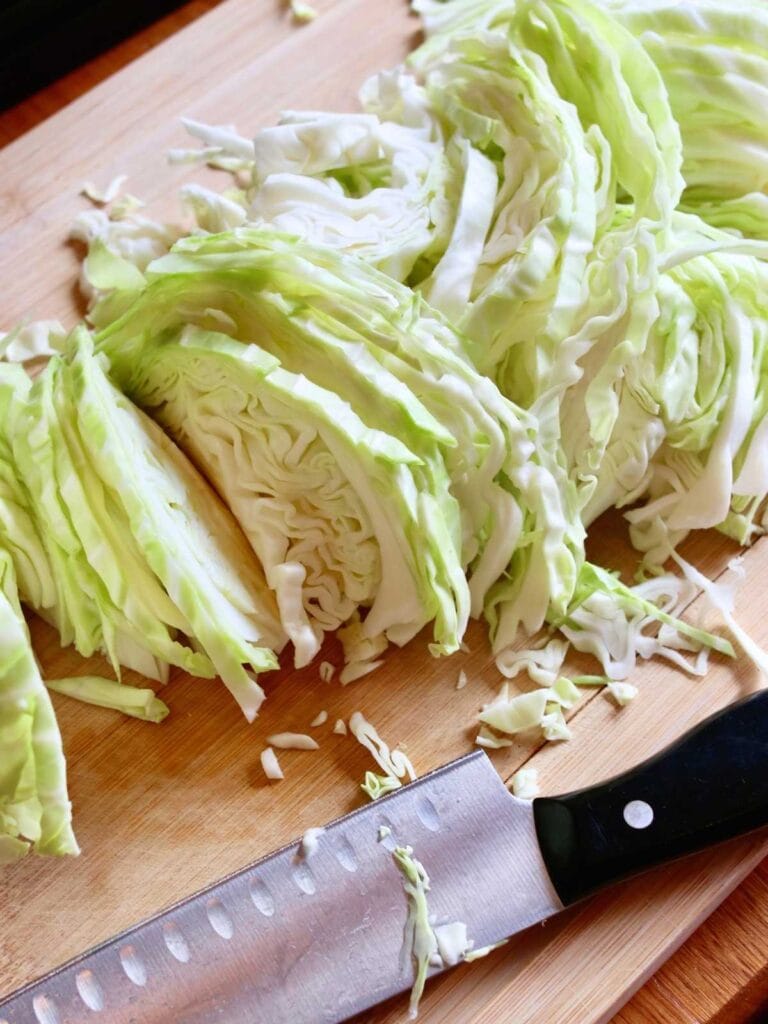
Step 1: First, remove the outer leaves from the cabbages, core them, then slice thinly.
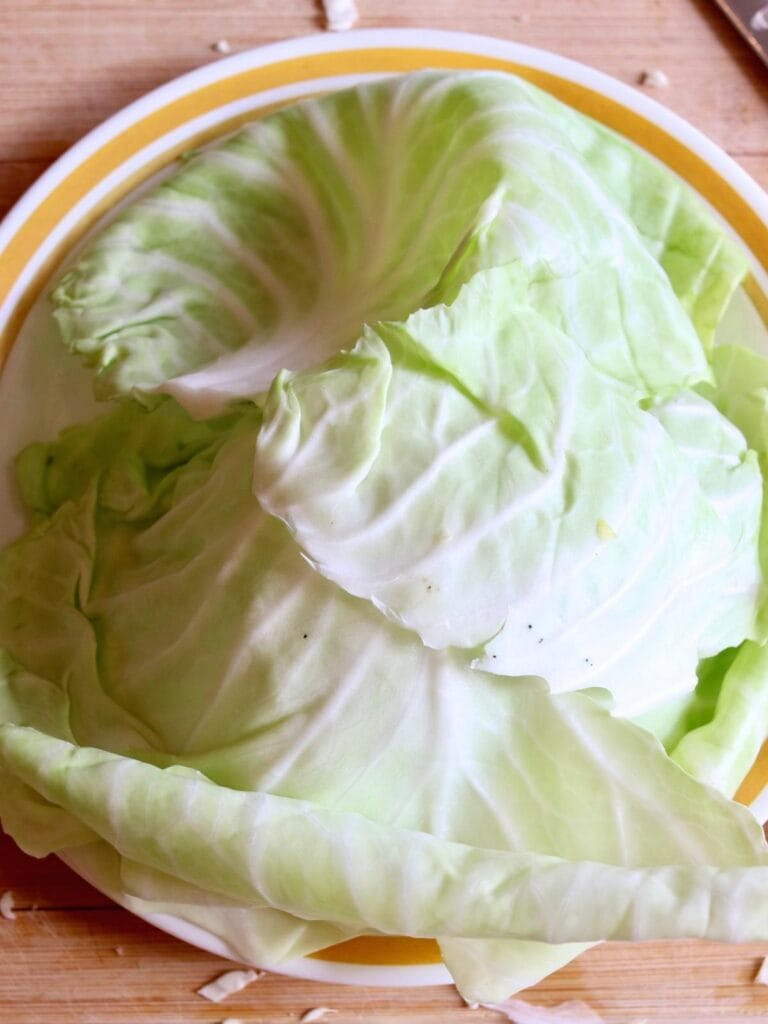
Step 2: Set aside 4-5 clean-looking whole outer leaves for later.
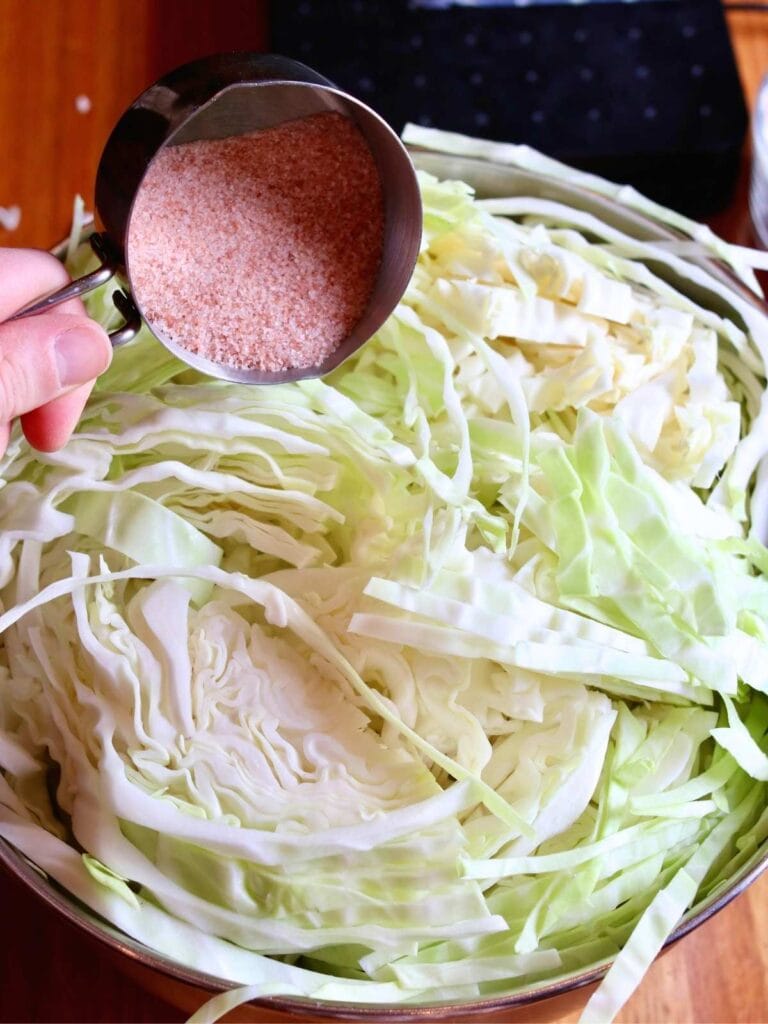
Step 3: Weigh the shredded cabbage and add 2% of the cabbage weight in salt. Toss to distribute it throughout the cabbage.
It’s easiest to do this calculation in grams, so make sure your scales is set to weigh in grams.
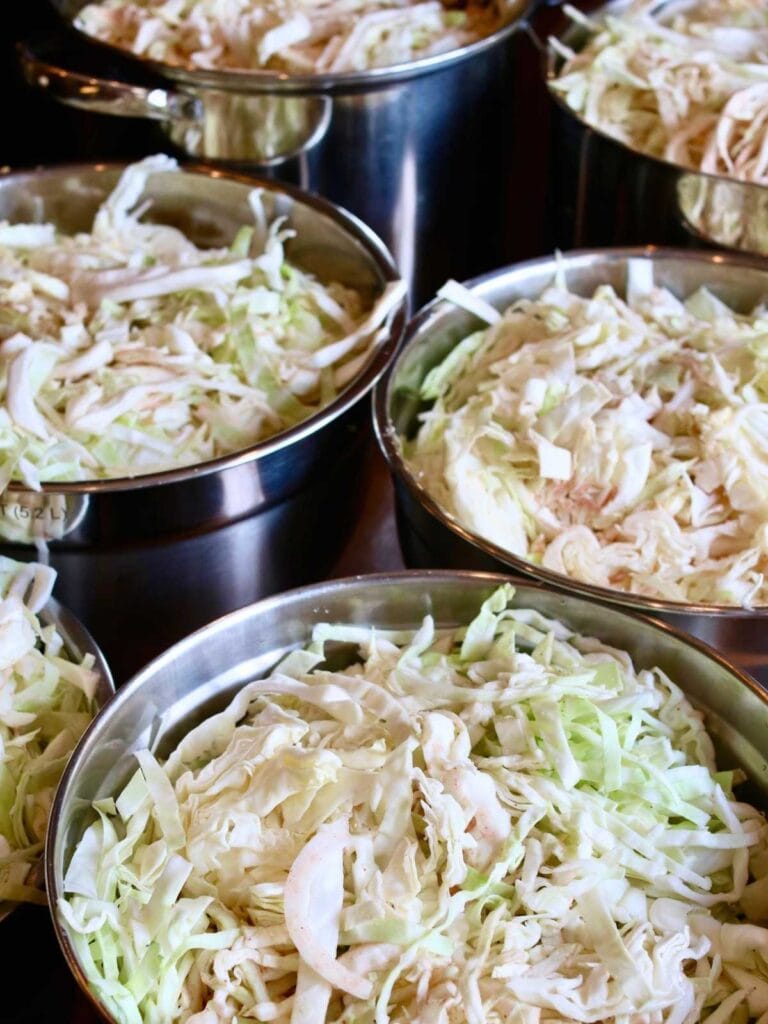
Step 4: Let the salted cabbage rest for about half an hour so the salt can begin drawing out the moisture. This makes it so much easier to pound!
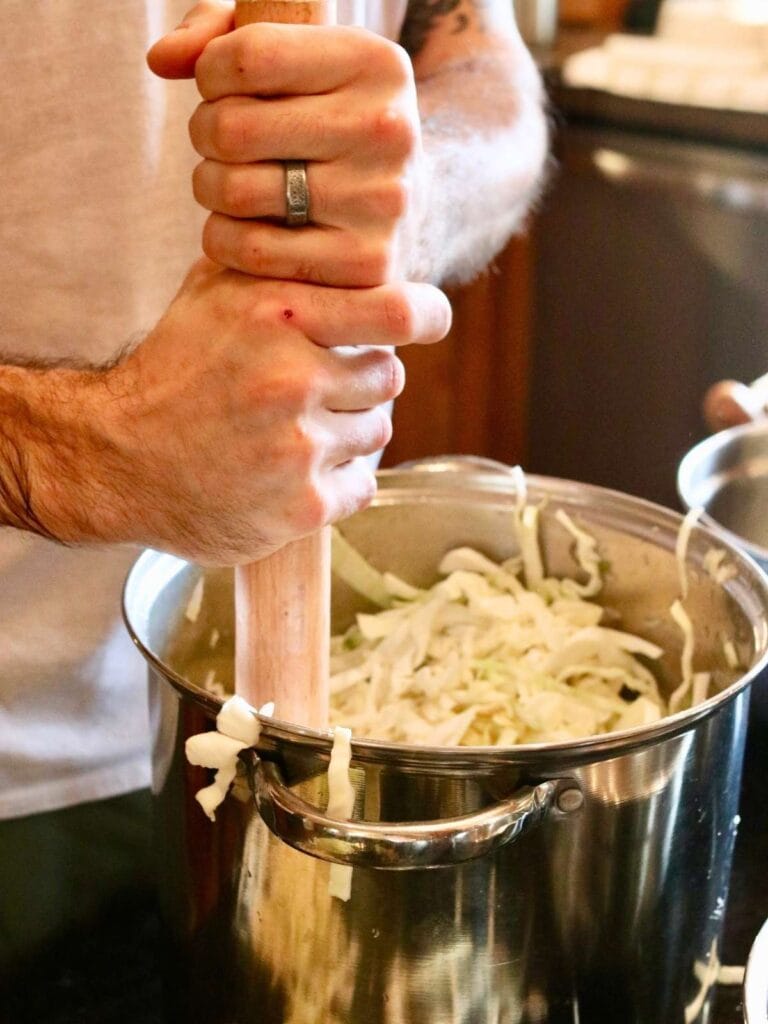
Step 5: Next, using a cabbage tamper, pound the cabbage until it’s released about all of its juice. This can take a while so be patient.
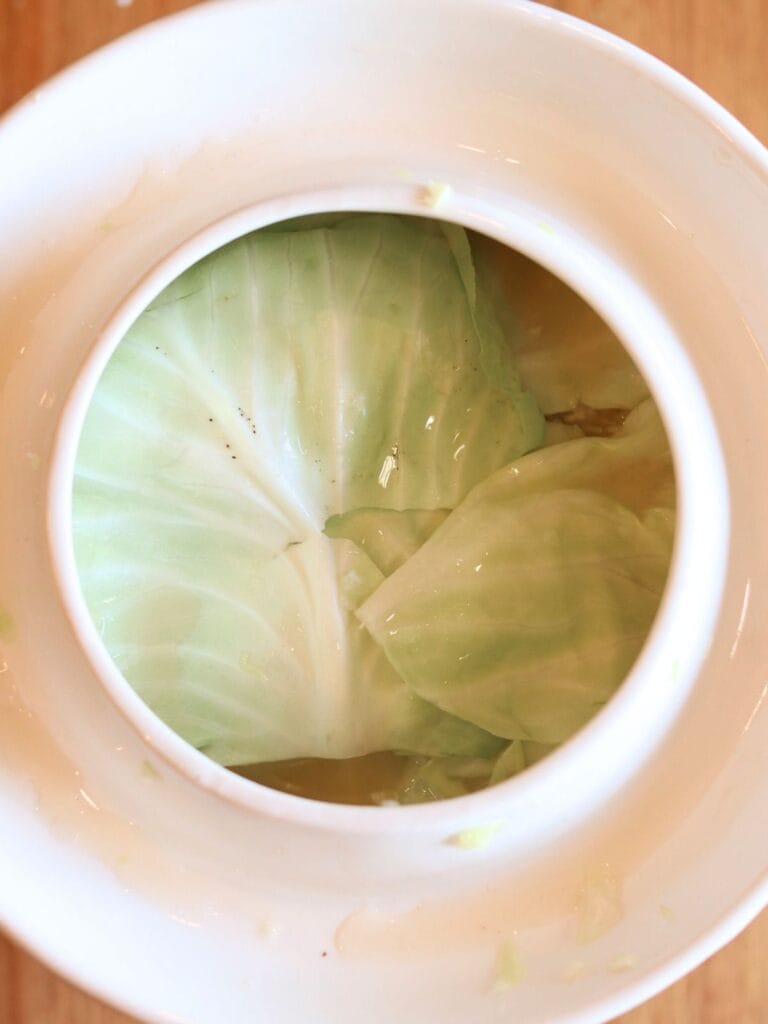
Step 6: Pack the cabbage into the crock as tightly as possible. Then place the whole cabbage leaves on top to minimize the amount of shredded cabbage floating on top of the brine.
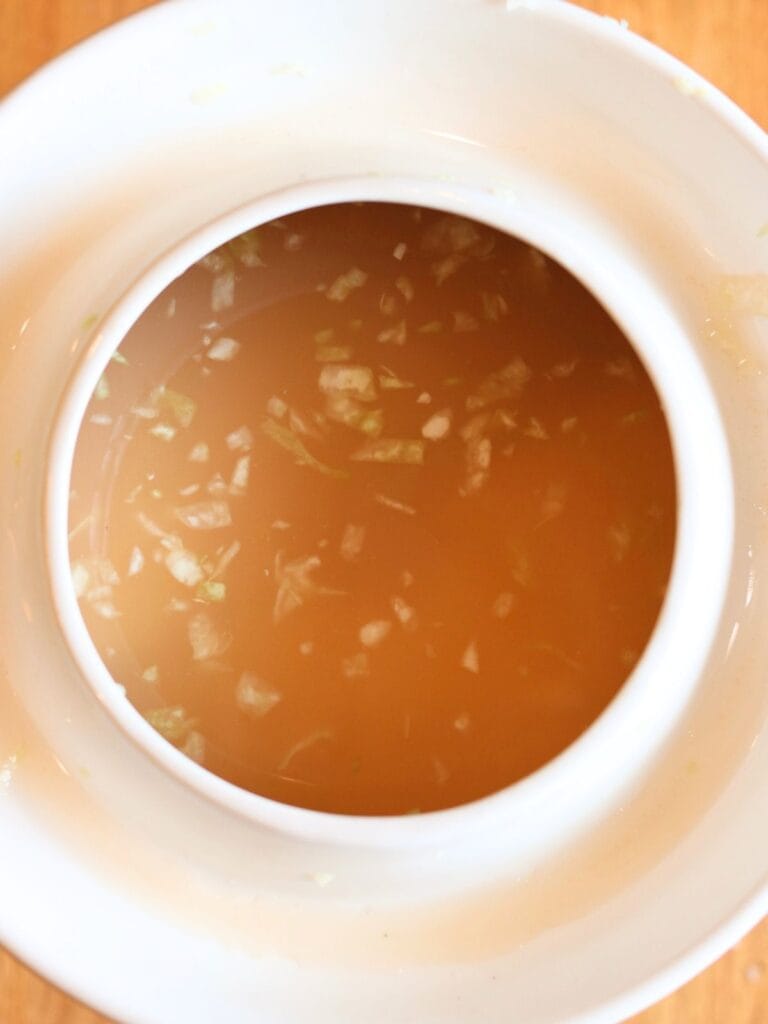
Step 7: Now place the crock weights on top and press down firmly so they’re completely covered with juice.
Then remove as many of the floating cabbage pieces as possible. It’s okay if there’s a little left, but you don’t want a significant amount.
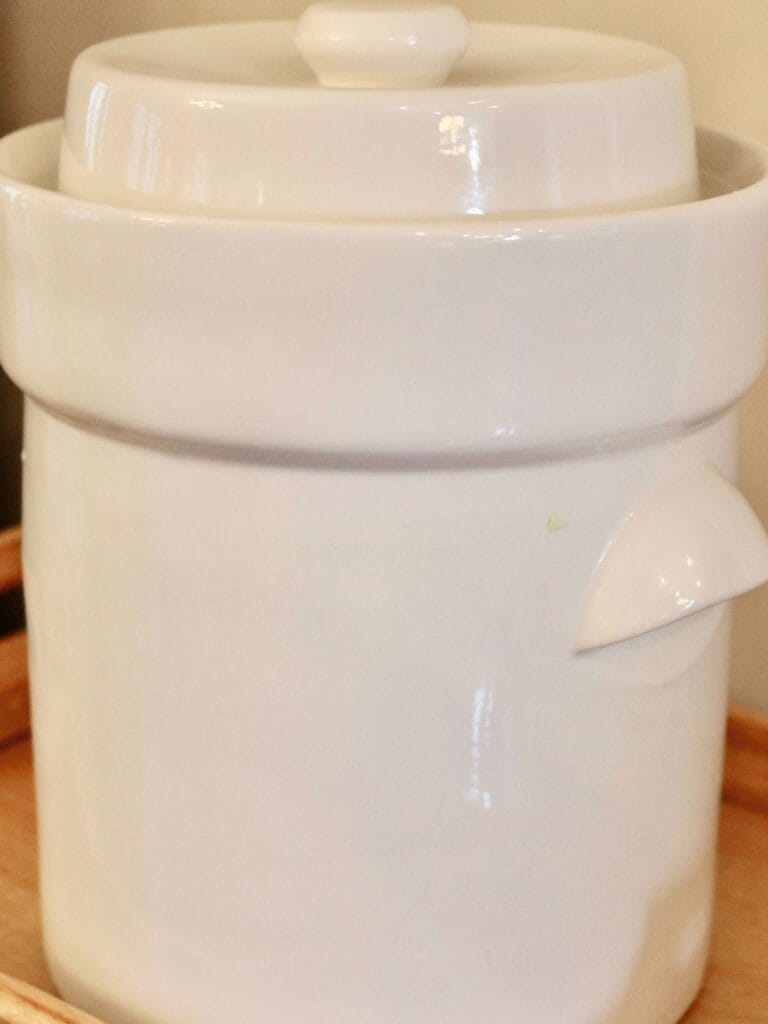
Step 8: Finally, put on the lid and fill the moat with water. Place the crock in a location between 60 and 75 degrees for about 2-3 weeks.
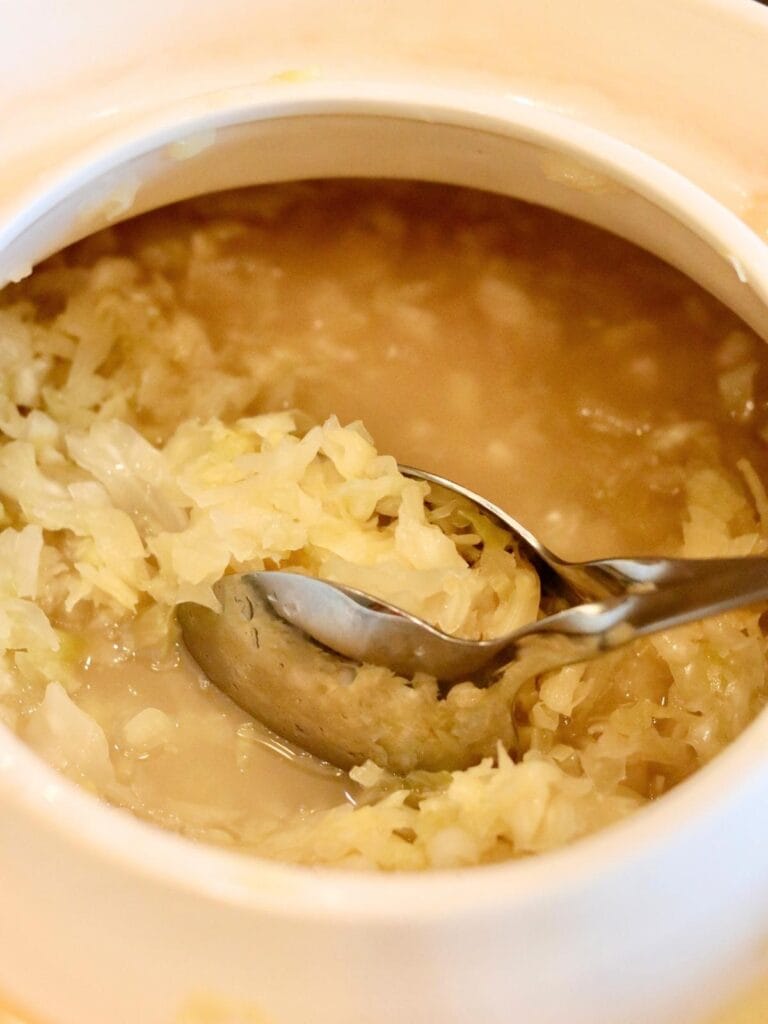
Step 9: Once the cabbage is done fermenting, open the crock and scoop the sauerkraut into large mason jars.
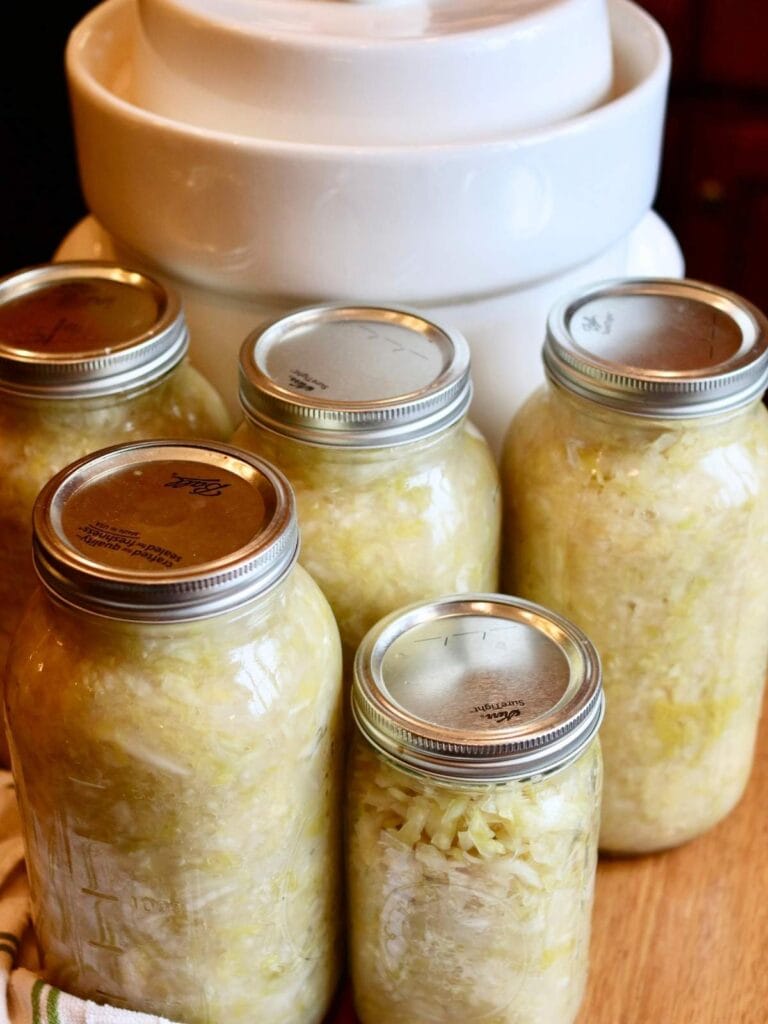
Step 10: Enjoy your homemade sauerkraut as a side dish or condiment with your favorite meals!
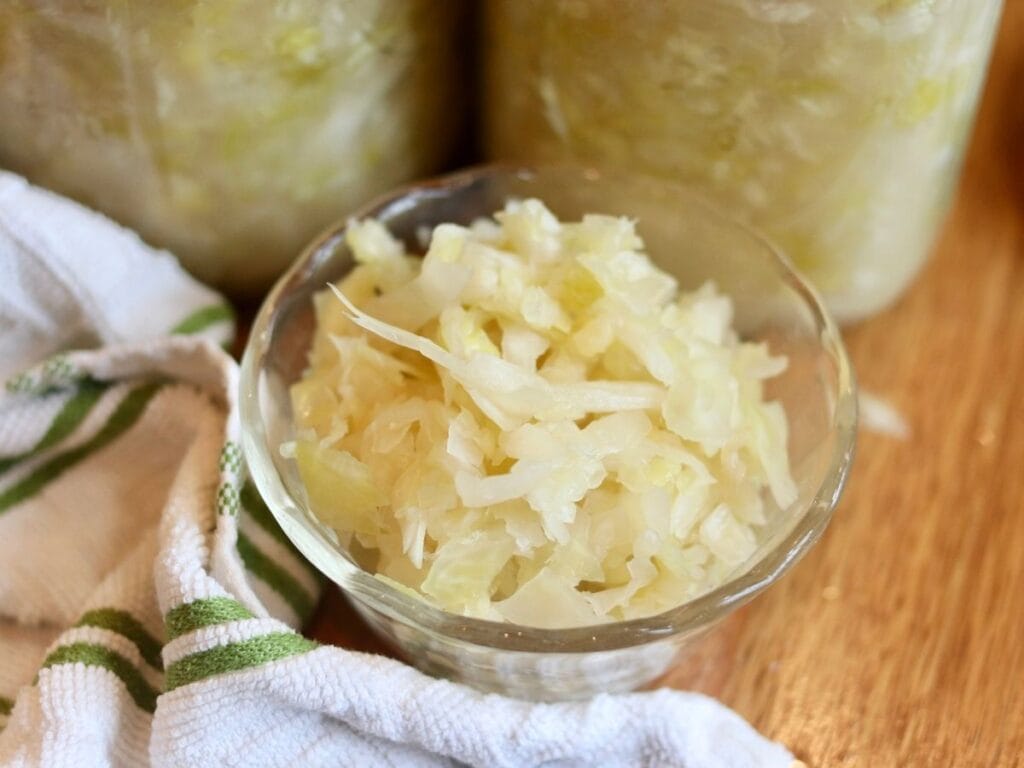
If you’re looking for more easy ferments, check out my fermented garlic and fermented honey cranberries!
Tips for Success
Use High Quality Cabbage
Fresh, juicy, organic cabbage is best, so make sure to buy it from a quality source.
Standard grocery stores (such as Walmart) often have the lowest quality cabbage, upscale/healthy grocery stores (like Natural Grocers and Publix) are usually slightly better, and fresh from a farmer is the best! If you don’t have a local farmer you can buy it from, I have had wonderful success buying cabbage from Azure Standard.
Make Sure There’s Enough Juice
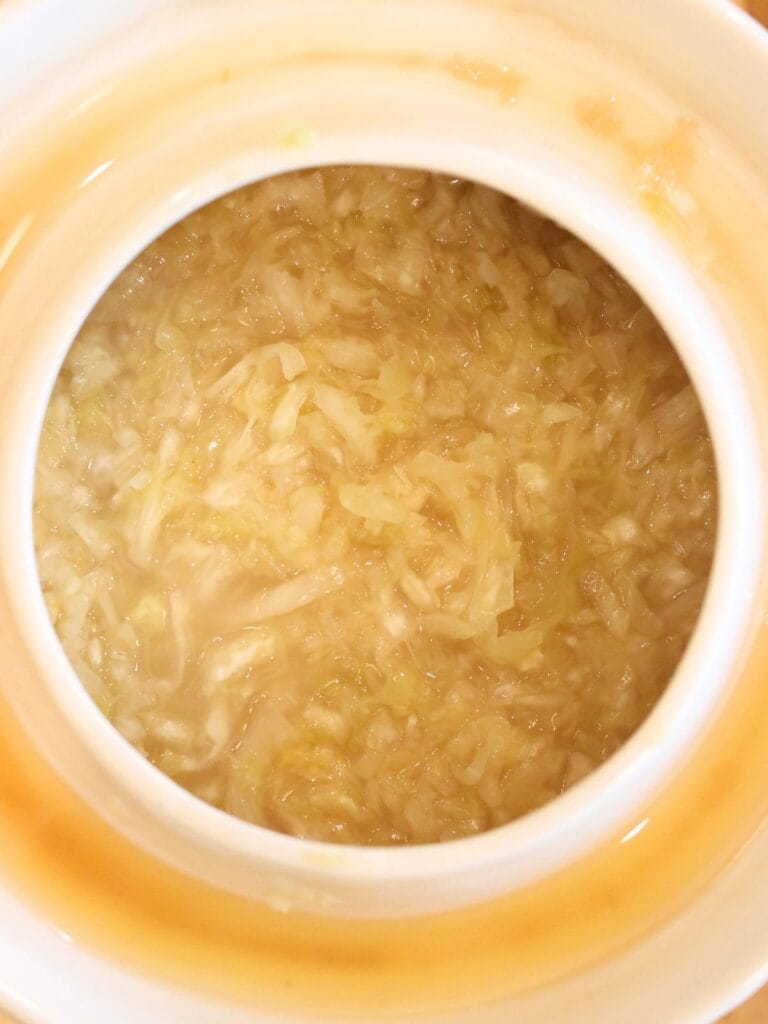
When the cabbage has been packed into the crock, there should be a minimum of one inch of juice covering it. The more the better!
If you don’t have enough juice, simply dissolve 2 tablespoons of salt in a quart of water, and pour in however much of the water you need.
Not having enough juice indicates that either you didn’t pound the cabbage enough or it wasn’t fresh.
Be Patient
Sauerkraut tastes the best when it has fermented for 2-3 weeks. To avoid contaminating it, once you close the lid, don’t open it until it’s done!
Keep it at the Right Temperature
Sauerkraut ferments best between 65 and 70 degrees, however, it will be fine as long as it’s kept between 60 and 75 degrees.
If the temperature in your home is above 75 degrees, wrap the crock in a damp towel to keep the temperature lower. During the winter, make sure to keep it in a temperature-controlled environment that does not drop below 60 degrees.
What to do with the Juice
When you make sauerkraut in a crock, you typically have much more juice than you want in your final product. This is a good thing!
Save the juice to start other ferments, such as fermented peppers, or enjoy it’s bright flavor in one of the following ways:
- Use in dips
- Substitute for the vinegar or lemon juice in homemade vinaigrette dressing
- Add to meat marinade
- Put in smoothies for a probiotic kick
- Take small shots for the nutrition
- Drizzle over cooked meat or vegetables
- Add to soups and stews
FAQs
Sauerkraut fermented at room temperature (between 65 and 75 degrees) is best when fermented for about 2-3 weeks. If the temperature is cooler, it can take an extra week or two.
A water seal crock is the best option for making sauerkraut since it effectively seals out contaminants. This will help your sauerkraut turn out perfectly every time!
Sauerkraut is typically made with 2% of the weight of the cabbage in salt.
If you’re fermenting in warmer weather or your cabbage isn’t as fresh as it should be, you can increase the salt to up to 3%. If the temperature is closer to 60 degrees, you can decrease it to 1.5%.
Once your sauerkraut is done fermenting, you can store it in the fridge for 4-6 months. As it sits, it will continue fermenting slowly, and the flavor will develop even more.
If you try this recipe, snap a photo and tag me on Instagram @violet_rightathome

Sauerkraut in a Crock (2 Ingredients)
Equipment
Ingredients
- Cabbage
- Salt
Instructions
- Remove the outer leaves from the cabbages, core them, then slice them thinly.Cabbage
- Set aside 4-5 clean-looking whole outer leaves for later.
- Weigh the shredded cabbage and add 2% of the cabbage weight in salt. Toss to distribute the salt throughout the cabbage.Salt
- Let the salted cabbage rest for about half an hour so the salt can begin drawing out the moisture.
- Using a cabbage tamper, pound the cabbage until it's released about all of its juice.
- Pack the cabbage into the crock as tightly as possible.
- Cover the shredded cabbage with the whole cabbage leaves to minimize the amount of shredded cabbage floating on top of the brine.
- Place the crock weights on top and press down firmly so they're completely covered with juice. Then remove as many of the floating cabbage pieces as possible.
- Put on the lid and fill the moat with water. Then place the crock in a location between 60 and 75 degrees for about 2-3 weeks.
- Once the cabbage is done fermenting, open the crock and scoop the sauerkraut into large mason jars.
Notes
- You can ferment 5 pounds of shredded cabbage per gallon crock capacity. When you purchase cabbage, keep in mind that you’ll need about 20% more weight than your crock can hold since you’ll discard the core and outer leaves.
- Fresh, juicy, organic cabbage works best, so make sure to buy it from a quality source.
- When the cabbage has been packed into the crock, there should be a minimum of one inch of juice covering it. If you don’t have enough juice, simply dissolve 2 tablespoons of salt in a quart of water, and pour in however much of the water you need.
- If the temperature is warmer than 75 degrees, wrap the crock in a damp towel to keep it cool.
- To avoid contaminating it, once you close the crock lid, don’t open it until it’s done.
Nutrition
If you tried this homemade sauerkraut, I’d love to hear how it turned out for you! Please make sure to come back and leave a comment and a ⭐️⭐️⭐️⭐️⭐️ rating.




This is my all-time favorite method for making delicious sauerkraut! Let me know if you have any questions on the process. I’d love to help!