

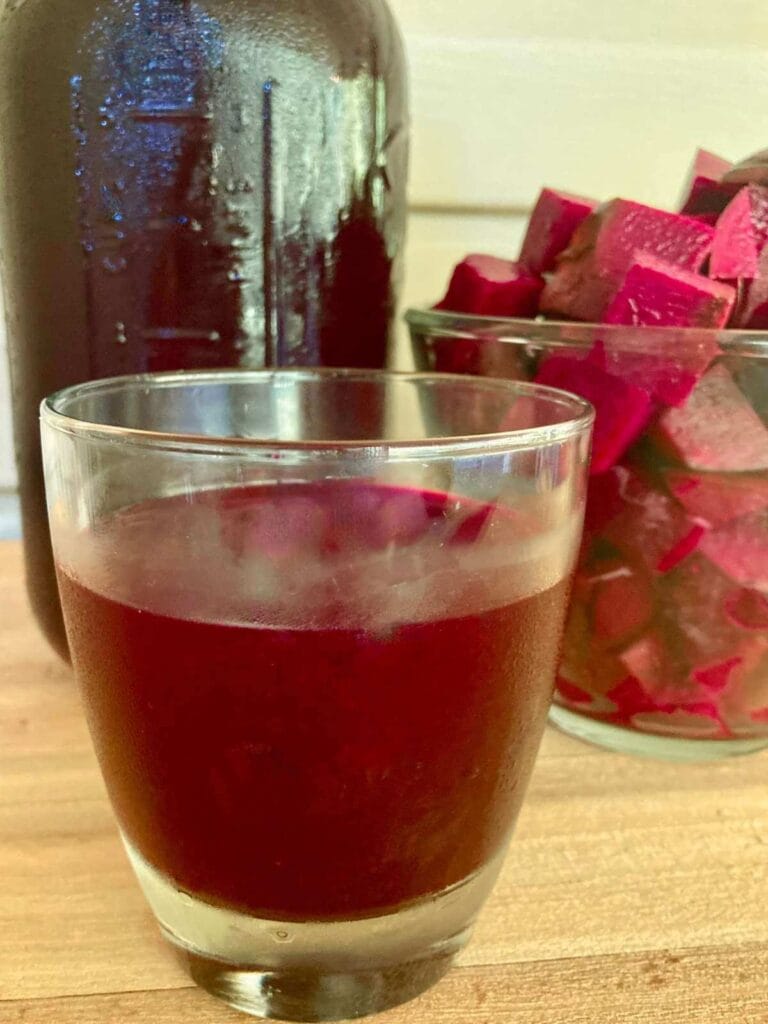
Full of deep flavor and powerful probiotics, beet kvass has been a traditional Russian and Ukrainian drink for over a thousand years. With only three ingredients, it’s easy to make and will quickly become a new staple in your home.
Quick Look at the Recipe
- 🍽️ Flavor: Rich, earthy, and tangy
- ⏱️ Prep Time: 10 minutes
- 🕒 Fermentation Time: 7 days
- 👥 Yield: 1 1/2 quarts
- 🥣 Main Ingredients: Beets, salt, sauerkraut juice (or other starter)
- 📋 Method: Lact-fermentation
- 📖 Dietary Info: Gluten-free, dairy-free, vegan, paleo, keto, Whole30
- 👩🍳 Tip: Sauerkraut juice gives the fermentation process a head start and helps prevent mold growth.

Plot Twist: I Like Beets Now
Making fermented foods and drinks is one of my favorite hobbies. Between yogurt, water kefir, beet kvass, and whatever else we happen to have going, my kitchen often feels like a little lab!
Beets aren’t usually a go-to vegetable around here, but beet kvass is a different story! It’s incredibly easy and fun to make, and it has become one of my favorite ways to add more probiotics and nutrition to my day.
Ingredients
Tools Needed
Step-By-Step Instructions
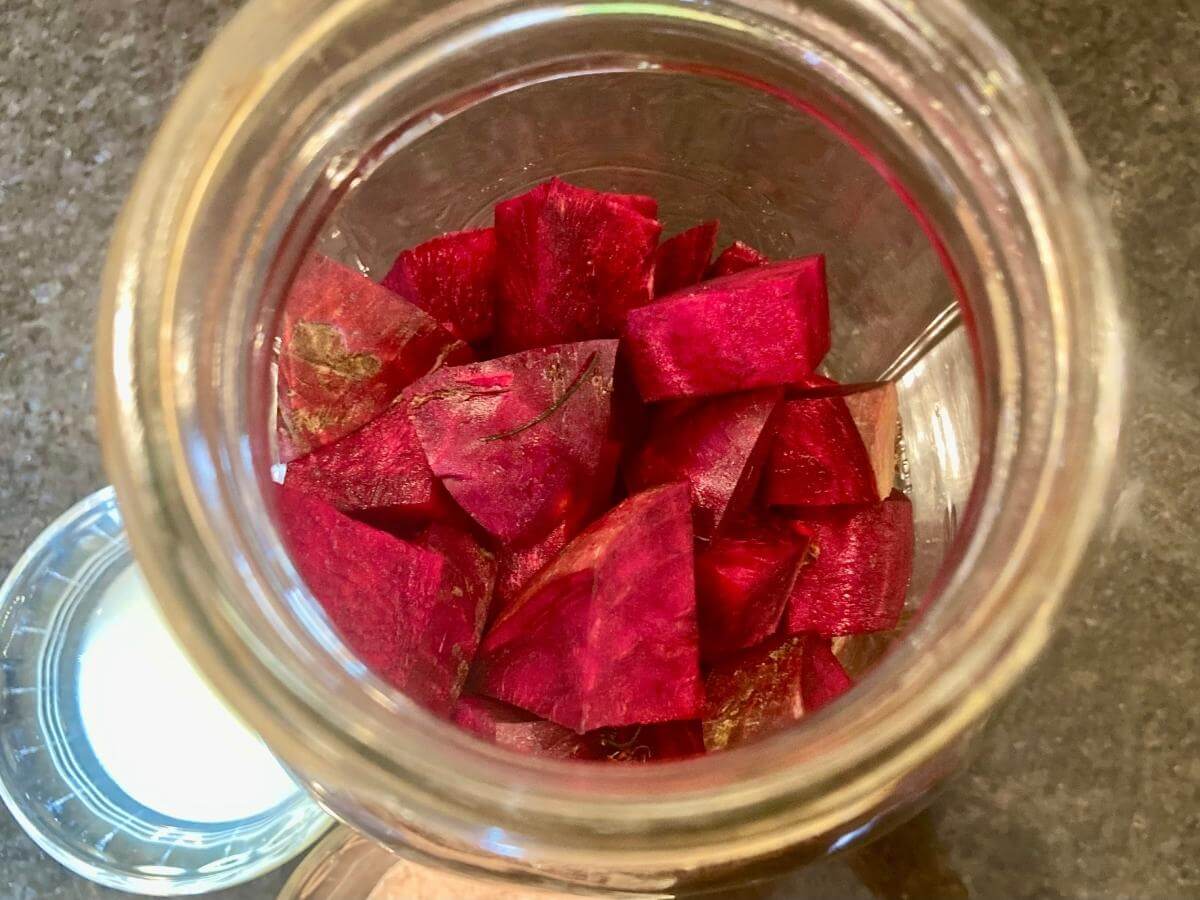
Step 1: First, place the beets in a 1/2 gallon Mason jar, filling it 1/2 to 3/4 of the way full. Then pour in the sauerkraut juice.
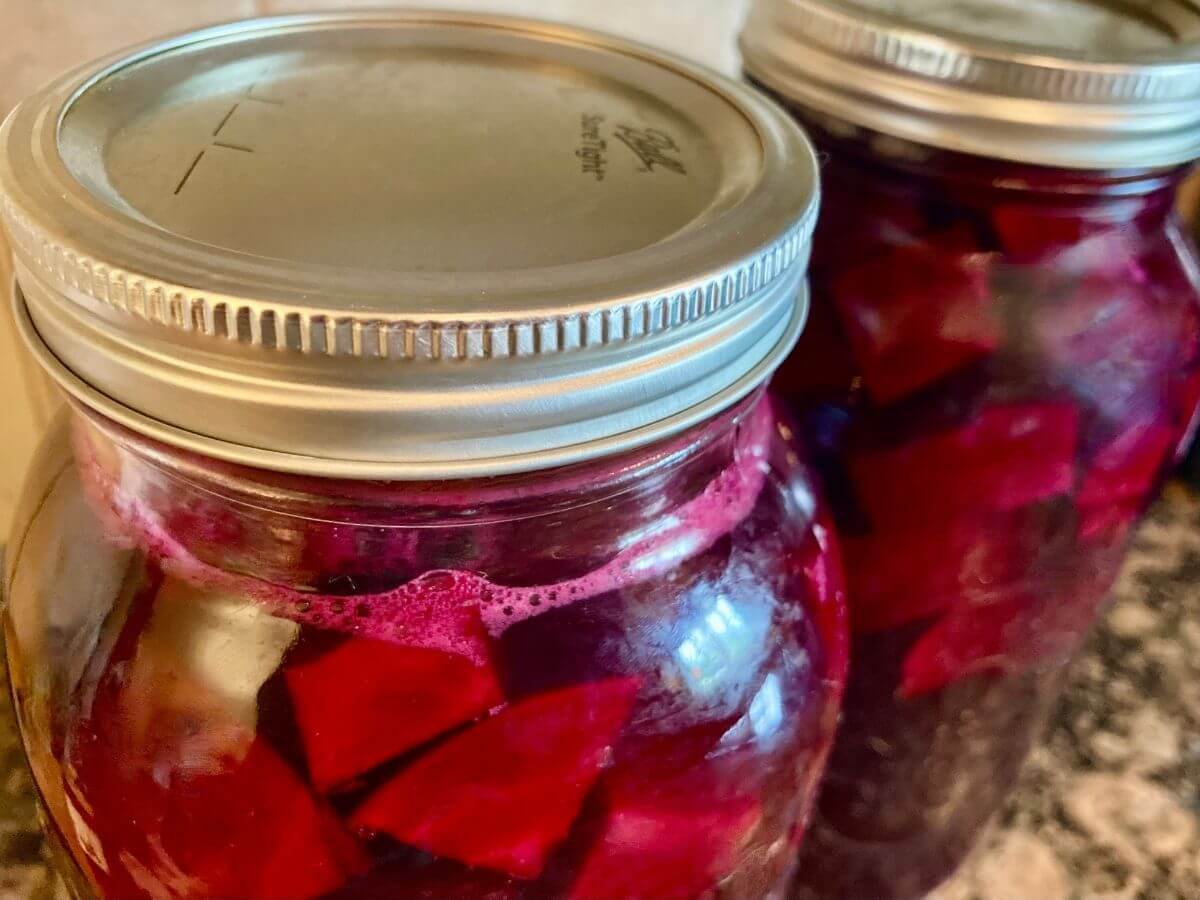
Step 2: Now dissolve the salt in the water and pour it into the jar, leaving about 1-2 inches of room at the top.
Screw on the lid and place the jar in a dark spot at room temperature, between 65 and 75 degrees.
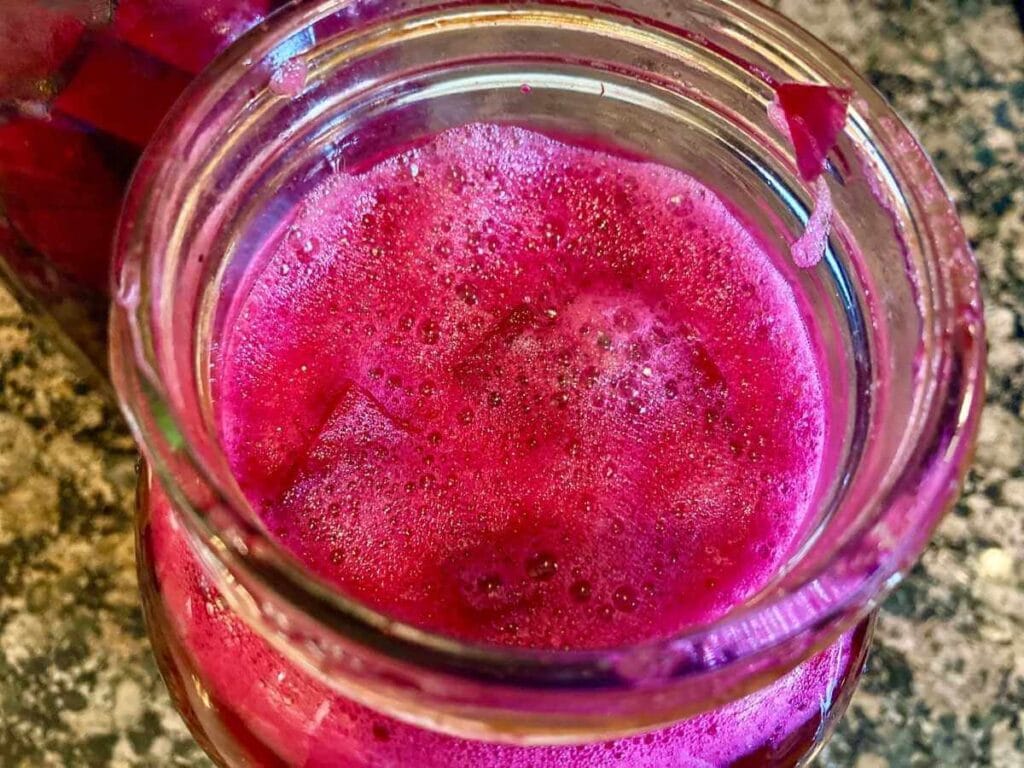
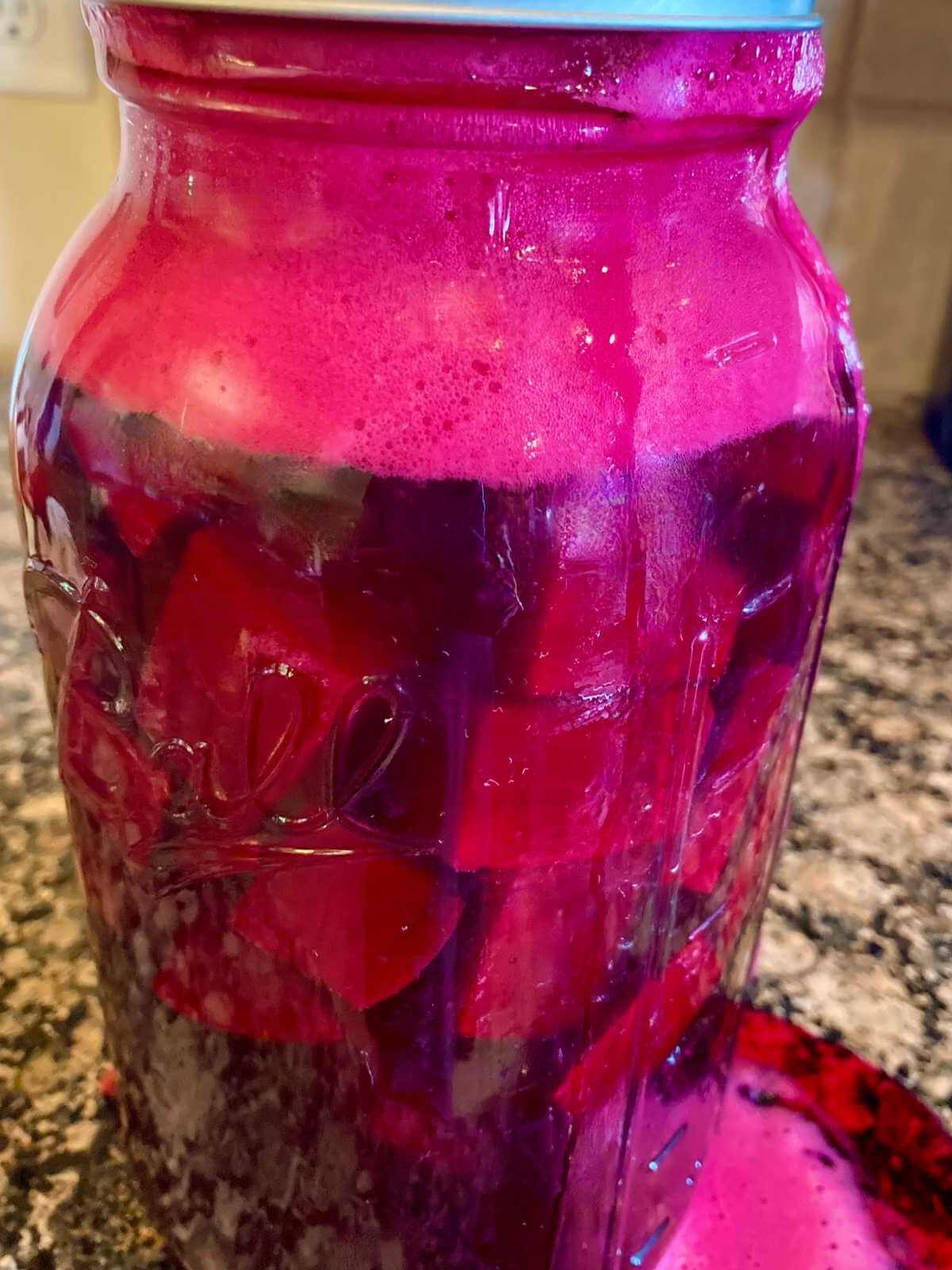
Step 3: Ferment your kvass for 5-10 days, or until you like the taste. Depending on your flavor preference, you can stop fermenting after just a few days or let it ferment for a few weeks.
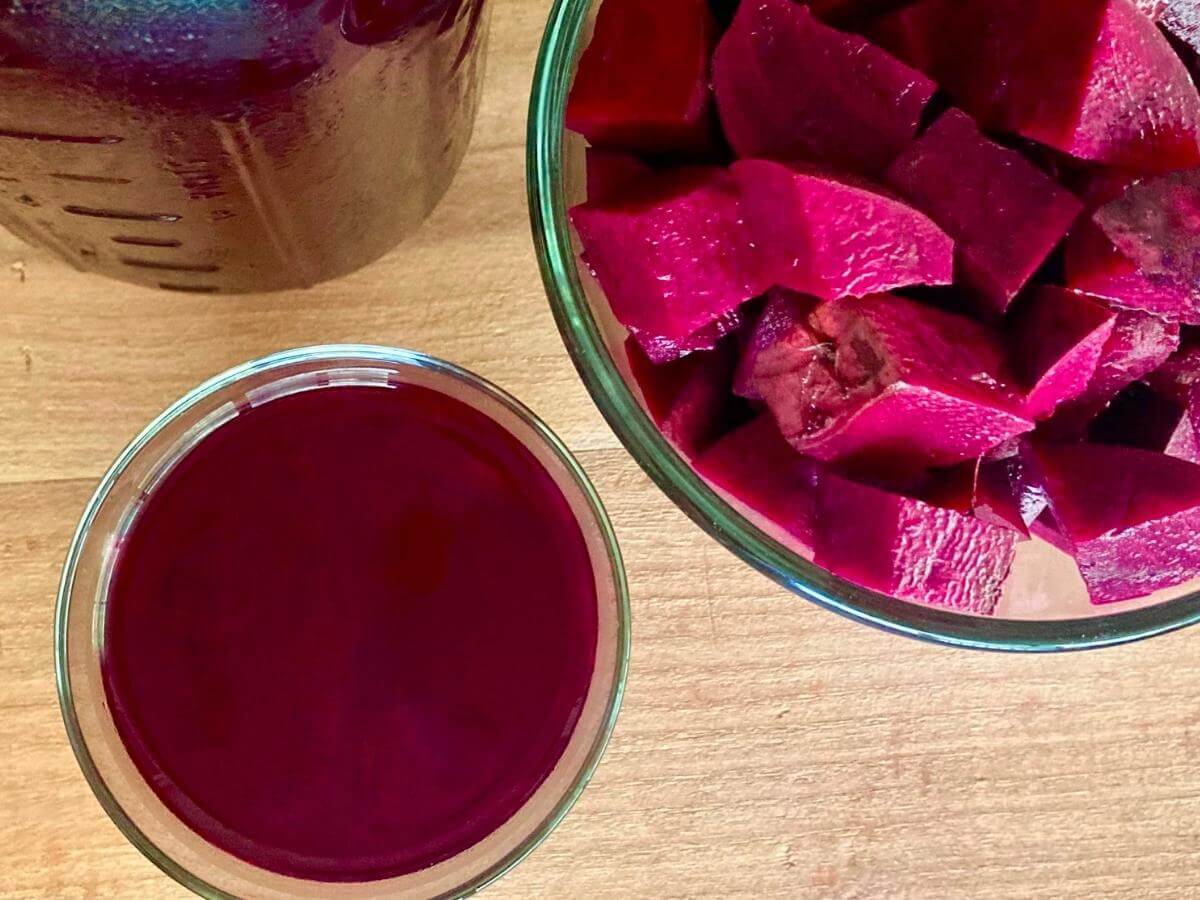
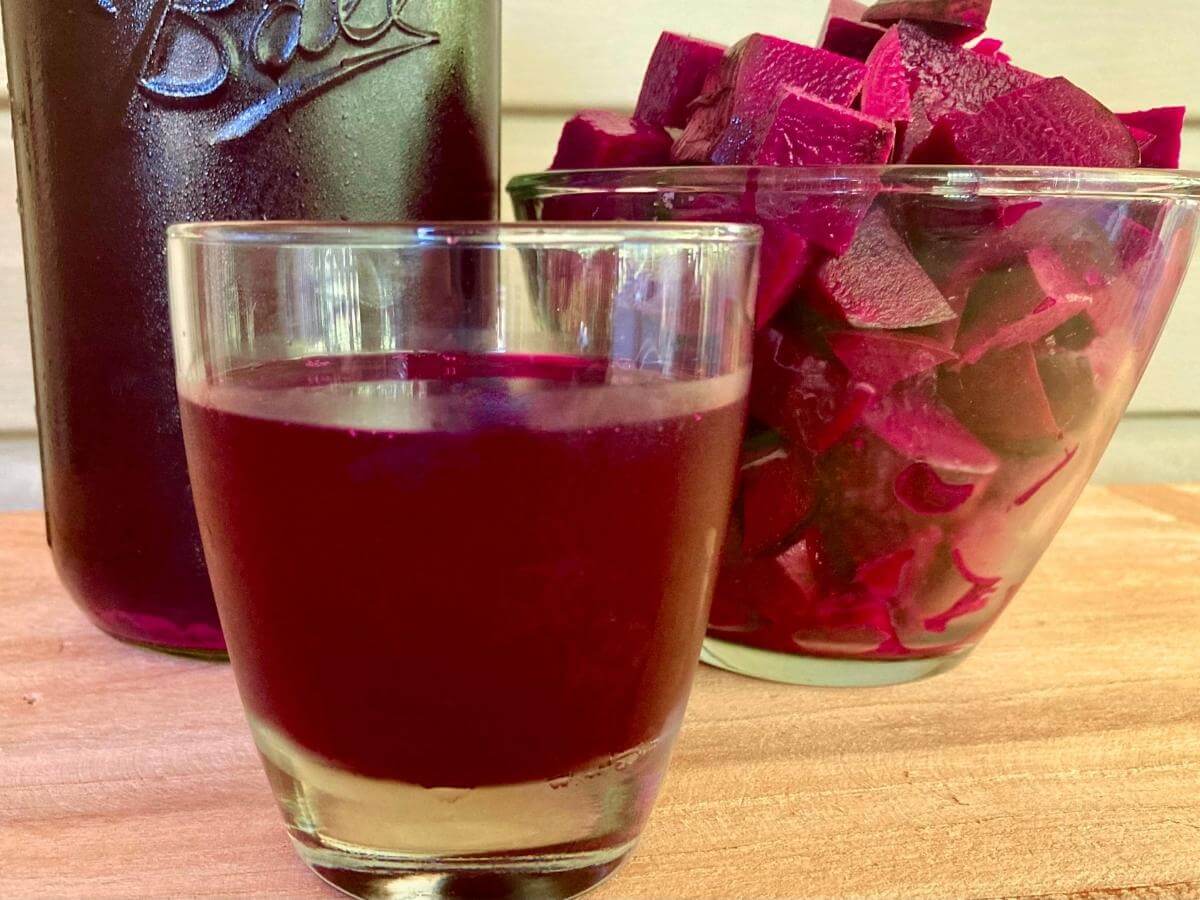
Step 4: Once the beet kvass is done, strain out the beet chunks and place it in the fridge.
You can start drinking it right away or let it age for a week in the fridge so the flavors can continue to develop.
Chef’s Tip: At least twice a day, slightly unscrew the lid to release any pressure caused by the fermentation process. It can take a few days to get going, but make sure to keep checking! If the pressure builds too high, it can leak everywhere or even break the jar.
If you’re looking for more fermented vegetable, check out my fermented peppers and homemade sauerkraut!
Tips for Success
Use filtered water – Chemicals in the water can ruin beet kvass since they can prohibit the growth of good bacteria. For best results, make sure to use filtered water or clean well water.
Add an active starter – While beet kvass can be made without an active starter, it usually turns out best if you have sauerkraut juice or whey with live probiotics. I have personally had more success with sauerkraut juice since whey often has higher amounts of yeast cultures.
Ferment in a bowl – Beet kvass can get pretty bubbly during fermentation! To protect against spills, place the jar on something that can catch any liquid that overflows.
Check the temperature – Beet kvass ferments best between 65 and 75 degrees. If your home is warmer than 75 degrees, wrap a damp towel around the jar to keep it cool.
Adjust fermentation time – Fermentation time can vary based on numerous factors, two of the biggest of which are how active your starter is and the room temperature. Very active starters as well as warmer temperatures make beet kvass ferment faster.
You may find that in the summertime you prefer kvass that hasn’t been fermented as long as in the winter. You may also need to experiment with fermentation times based on the starters you use.
Feel free to taste it every few days to see how it’s coming!
Can I Use the Beets from Kvass?
Yes, don’t throw them out! Beets that have fermented in kvass are delicious and packed with nutrition. They are slightly milder and tangier than other beets and have a rich flavor.
To retain the most nutrition, eat them raw in salads, with cheese, or thinly sliced as a sandwich topping.
You can also cook the beets, however, the heat will kill the probiotics. They will still have various other nutrients, so I typically use them however my family will eat them. They are perfect in soups, roasted, or however else you like to cook beets.
Violet’s Tips for Serving
Typically, beet kvass is drunk cold as a refreshing and healthy beverage. A serving size is usually 1/4 – 1/2 cup, so you don’t need to drink lots. Some people add a squeeze of lemon juice or sprig of mint to their glass for flavor variation.
You can also add beet kvass to salad dressings or even cocktails!
If the beet flavor is difficult for you to handle, you can add a small amount to a smoothie.
FAQs
No, not for this beet kvass recipe! All you need is a 1/2 gallon mason jar.
Once beet kvass is done fermenting, you can store it in the fridge for up to 6 months.
The longer you store it, the more the flavor develops. It will also continue to ferment very slowly, so you may notice that if you leave it for a few months it’s much more tangy and less sweet.
Yes, fermentation is one of the safest food preservation methods there are, even safer than canning. If something goes wrong, there will be obvious signs. If the beet kvass looks, smells, and tastes good, it should be safe to eat.
It’s typically recommended to drink 1/4 – 1/2 cup daily. However, especially if you have a sensitive gut, you may want to start with a much smaller amount. Introducing new probiotics to your body can cause uncomfortable detox symptoms, so it’s a good idea to start slow.
If you try this recipe, snap a photo and tag me on Instagram @violet_rightathome
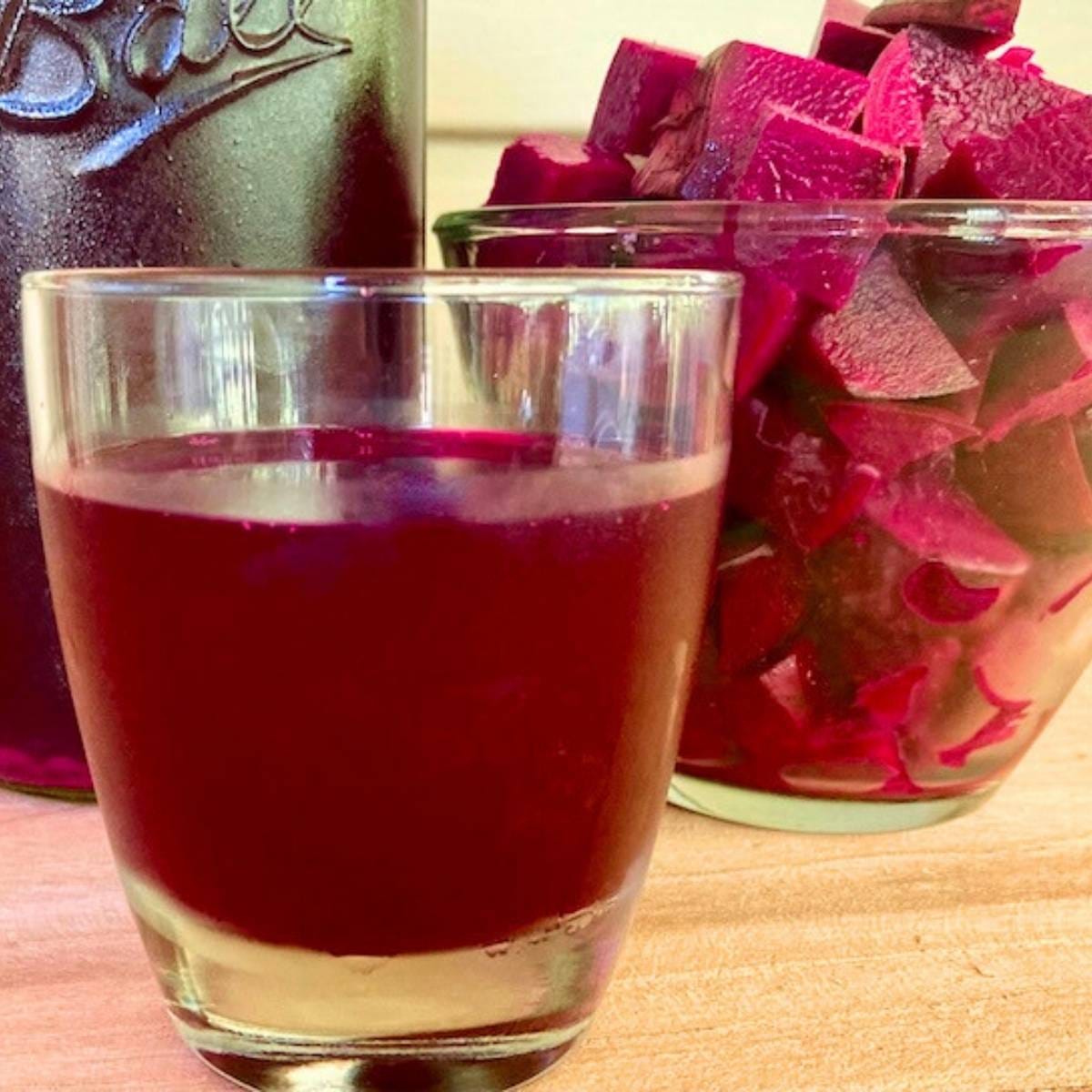
Traditional Beet Kvass (3 Ingredients)
Ingredients
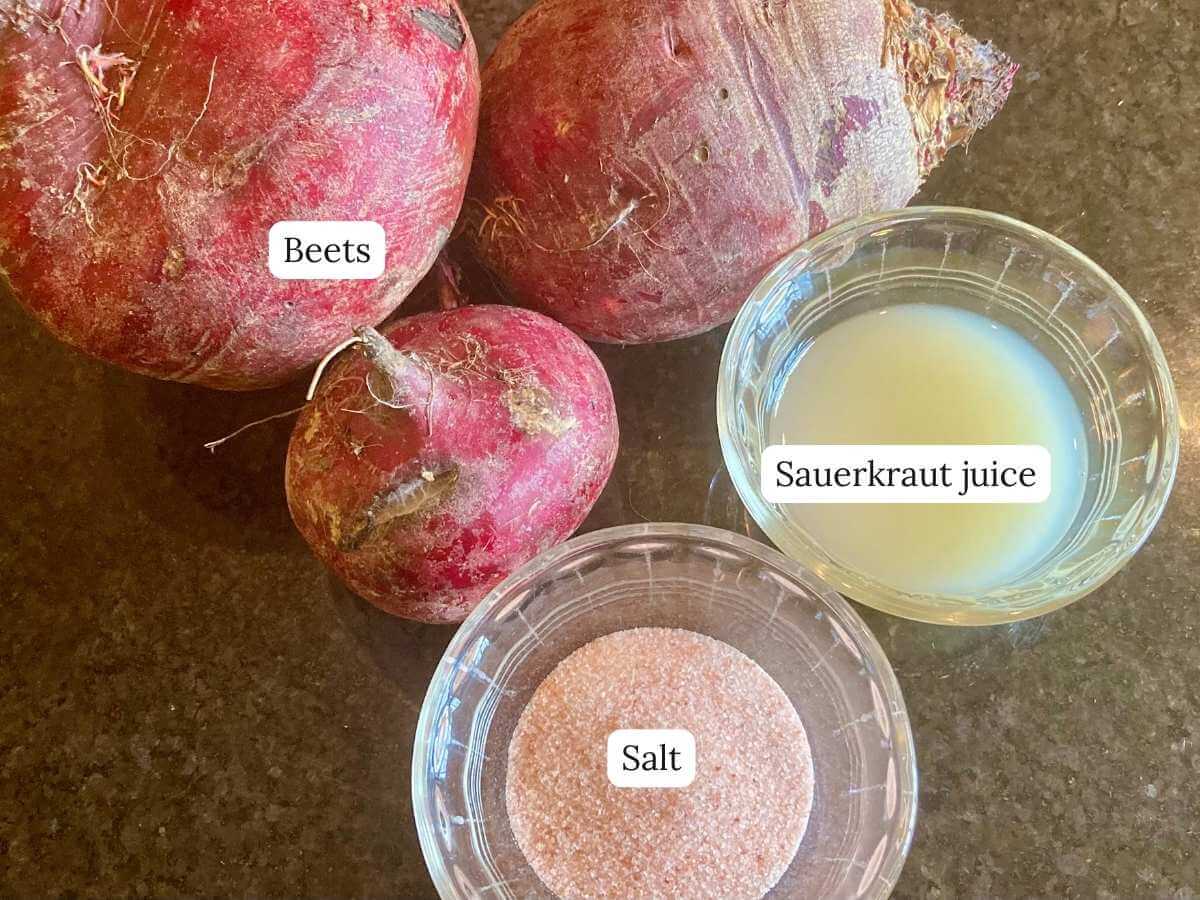
- 1 3/4 pounds beets Unpeeled and cut into 1 1/2" cubes
- 1/4 cup sauerkraut juice with live bacteria
- 3 tablespoons course salt
- 1 1/2 quarts water filtered
Instructions
- Place beets in a 1/2 gallon Mason jar, filling it 1/2 to 3/4 of the way full.1 3/4 pounds beets
- Pour in the sauerkraut juice.1/4 cup sauerkraut juice
- Dissolve the salt in the water and pour it into the jar, leaving about 1-2 inches of room at the top.3 tablespoons course salt, 1 1/2 quarts water
- Screw on the lid and place the jar in a dark spot at room temperature, between 65 and 75 degrees.
- At least twice a day, slightly unscrew the lid to release any pressure caused by the fermentation process.
- Ferment your kvass for 5-10 days, or until you like the taste.
- Once the beet kvass is done, strain out the beet chunks and place it in the fridge. You can start drinking it right away or let it age for another week in the fridge so the flavors can continue to develop.
Notes
- You can substitute whey for the sauerkraut juice.
- Beet kvass can get pretty bubbly during fermentation! To protect against spills, place the jar on something that can catch any liquid that overflows.
- Beet kvass ferments best between 65 and 75 degrees. If your home is warmer than 75 degrees, wrap a damp towel around the jar to keep it cool.
- Fermentation time can vary based on numerous factors, two of the biggest of which are how active your starter is and the room temperature. Very active starters as well as warmer temperatures make beet kvass ferment faster.
Nutrition
If you tried this beet kvass, I’d love to hear how it turned out for you! Please make sure to come back and leave a comment and a ⭐️⭐️⭐️⭐️⭐️ rating.



I try to always have a jar of this on hand for an easy probiotic boost! If you have any questions on fermenting beet kvass, let me know. I’m always happy to help!